
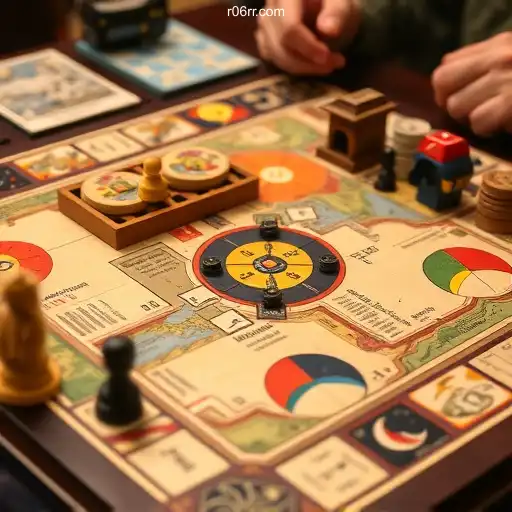

Exploring the World of Tabletop Games: The Ultimate Guide
The Fascinating History of Tabletop Games
Tabletop games have been a mainstay in human culture for centuries, providing entertainment, social interaction, and intellectual challenges. From ancient board games discovered in archaeological digs to the modern-day resurgence of tabletop gaming culture, the evolution of these games has been remarkable. This section will delve into how these games started and transformed over the years.
Ancient Origins
Many of today's tabletop games trace their roots back to ancient civilizations. Games like Senet from Egypt, Go from China, and The Royal Game of Ur from Mesopotamia highlight the early emergence of board games as a popular pastime. These games were not just a form of entertainment; they often had cultural and religious significance.
The Middle Ages to the Renaissance
During the Middle Ages, games such as Chess and Backgammon gained prominence in Europe, often enjoyed by nobility and commoners alike. As exploration and trade expanded during the Renaissance, games became more varied and widespread, introducing new genres and mechanics.
The Modern Revival of Tabletop Gaming
In recent decades, there has been a notable revival and a burgeoning interest in tabletop games. This resurgence is attributed to several factors, including the rising popularity of strategic board games and role-playing games like Dungeons & Dragons. People globally are rediscovering the unique joys of tabletop games as a form of both social and solitary entertainment.
The Role of Strategic Board Games
Games like Settlers of Catan and Carcassonne have been pivotal in the modern tabletop game revival, captivating players with their strategy-focused gameplay and intricate dynamics. These games encourage critical thinking, negotiation, and collaboration, making them appealing to a wide audience.
Rising Popularity of Role-Playing Games
Role-playing games (RPGs) have seen an immense rise in popularity, driven by their immersive storytelling and character-building elements. RPGs engage players in collaborative storytelling, where they must work together to overcome challenges and achieve objectives. This aspect has particularly captivated audiences, contributing to the overall growth of the tabletop gaming market.
Digital Transformation: Linking Tabletop and Online Gaming
As the digital world continues to expand, the intersection between traditional tabletop games and online gaming platforms becomes more evident. Websites and applications like R06.Com Descubra o Melhor dos Jogos Online Brasileiros Hoje Mesmo exemplify how digital technology is redefining the landscape of gaming.
Seamless Integration of Digital Tools
Tabletop enthusiasts now have access to a plethora of digital tools that enhance the gaming experience. From digital dice and virtual battle maps to online platforms that host multiplayer tabletop adventures, technology has enabled greater flexibility and accessibility. This digital integration bridges geographical gaps, allowing players from different parts of the world to connect and engage in shared gaming experiences.
Expansion of Online Game Libraries
The availability of online versions of classic and contemporary tabletop games has made it easier for enthusiasts to enjoy their favorite games anytime, anywhere. Platforms like R06.Com Descubra o Melhor dos Jogos Online Brasileiros Hoje Mesmo offer a wide array of online adaptations, bringing the joy of tabletop gaming to digital devices. These platforms not only provide the games but also create communities where players can discuss strategies, share experiences, and organize gaming sessions.
The Socio-Cultural Impact of Tabletop Games
Tabletop games significantly impact social interactions, cultural exchanges, and even educational practices. Understanding these impacts helps us appreciate why these games continue to be relevant.
Social Interactions and Community Building
One of the core reasons tabletop games remain popular is their ability to foster face-to-face interactions. They provide an opportunity for friends and family to gather around, engage in conversation, and collaborate towards common goals. The social nature of these games has led to the creation of dedicated tabletop gaming communities and conventions.
Educational Benefits
Tabletop games can serve as effective educational tools. They enhance critical thinking, problem-solving, and decision-making skills. Educators have been increasingly incorporating tabletop games into curriculum to teach subjects ranging from history to mathematics, owing to their interactive and engaging nature.
Conclusion
Tabletop games are more than just entertainment; they are a rich tapestry interwoven with history, culture, and technology. Whether played in their traditional form or through digital adaptations like those on R06.Com Descubra o Melhor dos Jogos Online Brasileiros Hoje Mesmo, these games continue to captivate audiences worldwide. In embracing both the old and the new, tabletop games stand as a testament to the enduring appeal of interactive, communal play.